Note-Taking Workflow: How to Turn Notes Into Finished Work
A note-taking workflow turns what you read, hear and think into finished work. The five stages, from capture to review, and how to set them up.
Improve your productivity with digital note-taking techniques, proven methods and app comparisons.
A note-taking workflow turns what you read, hear and think into finished work. The five stages, from capture to review, and how to set them up.
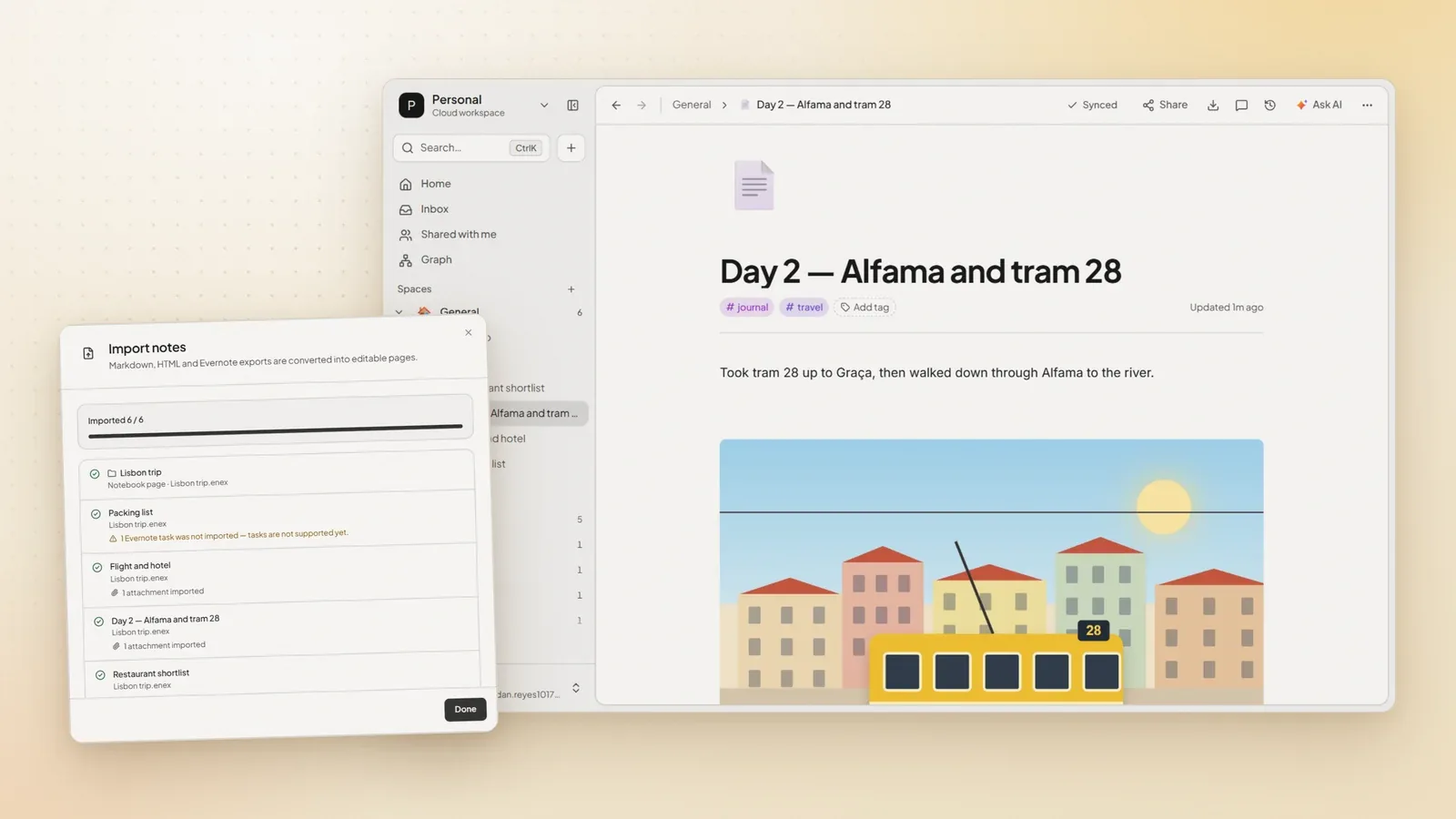
Evernote's free plan now stops at 50 notes. Here is how to export everything, which alternatives import .enex files, and what each one keeps or drops.
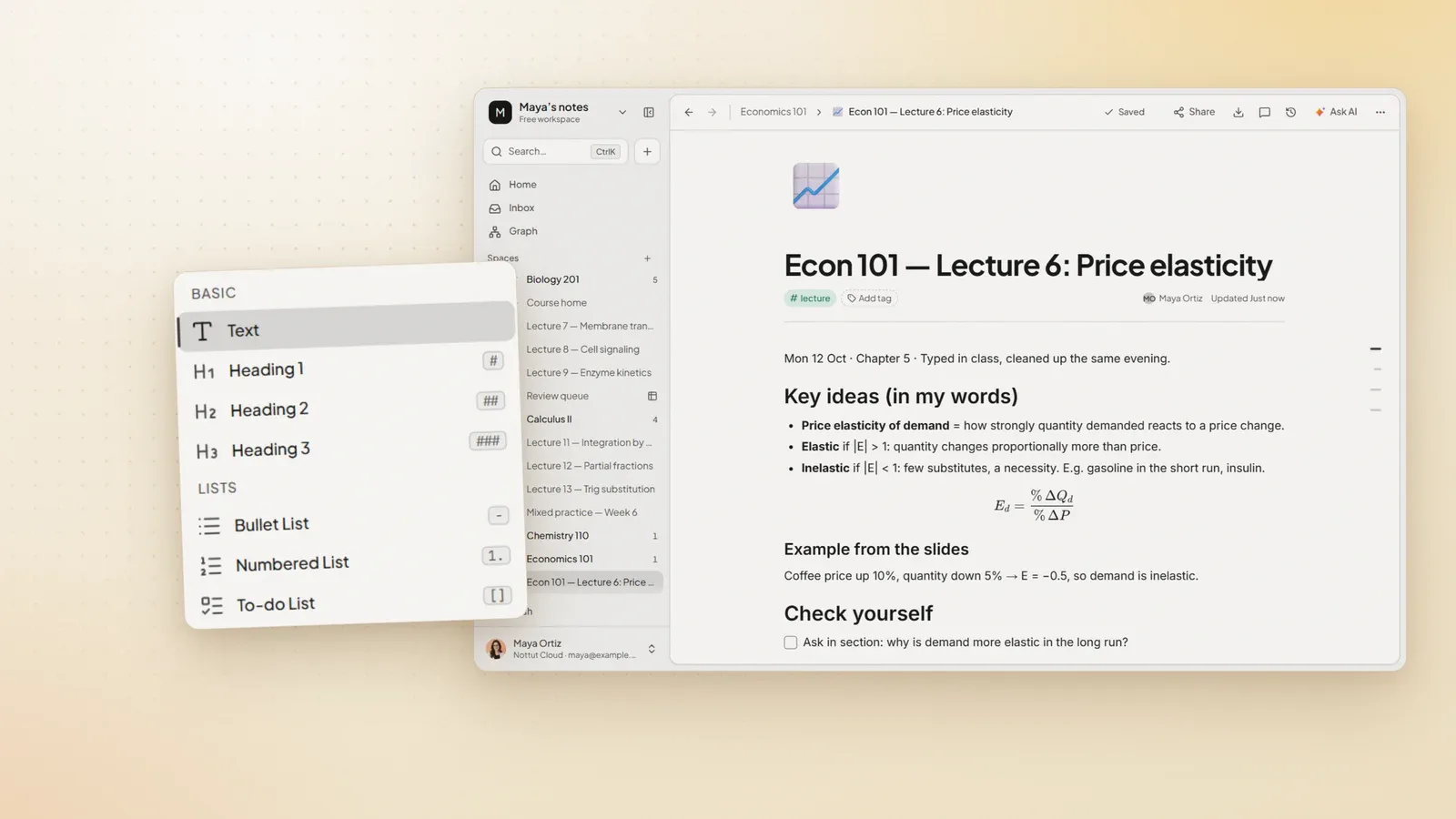
Typing notes works if you avoid two traps: transcribing word for word and getting distracted. A research-backed setup for before, during and after class.
A literature review shows what research knows about a question and where it disagrees. Learn the review types and 7 steps to write one, with an example.
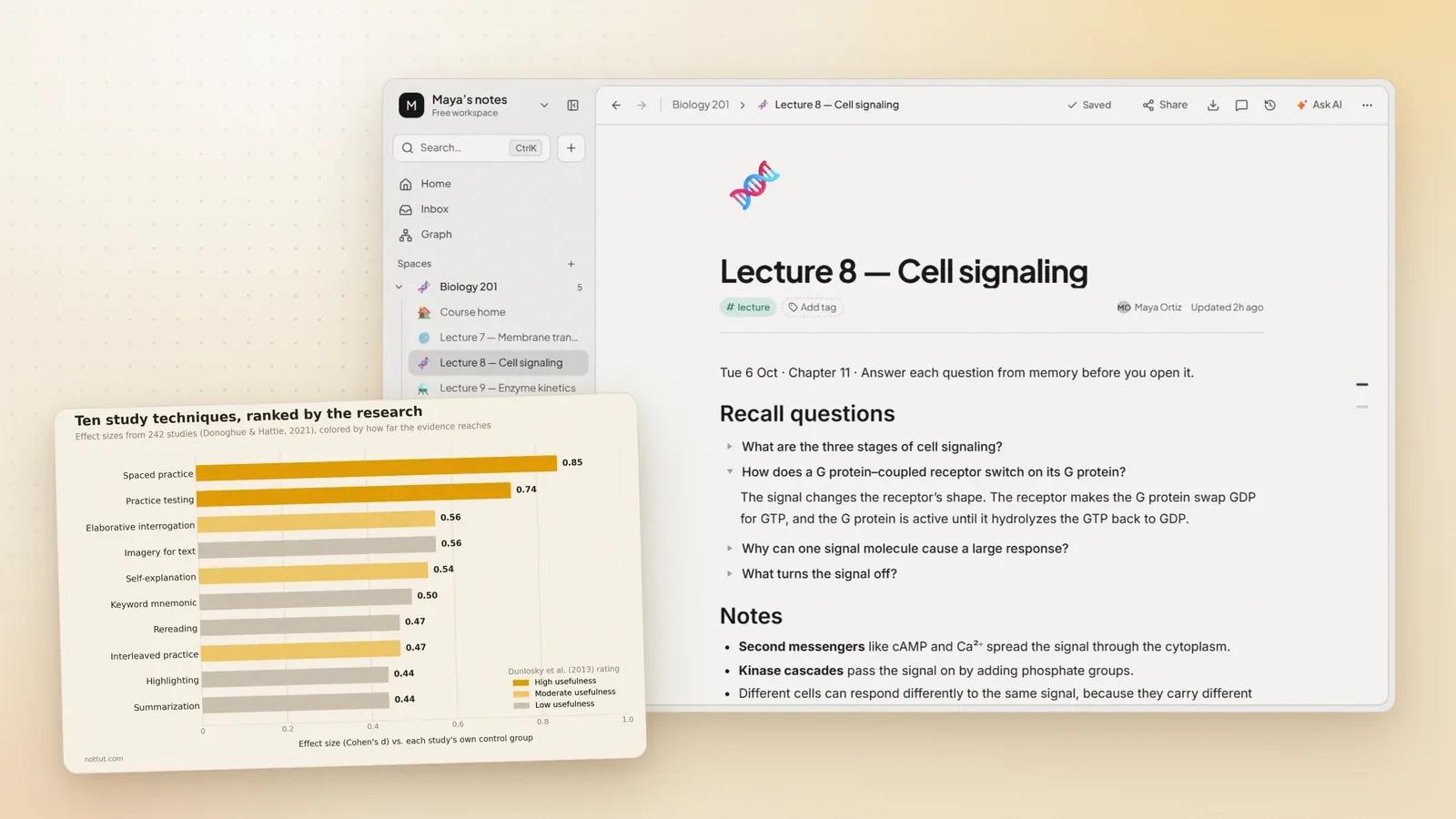
The 10 most-studied study techniques and methods, ranked by research: what works, what only feels productive, and how to use each one in your notes.
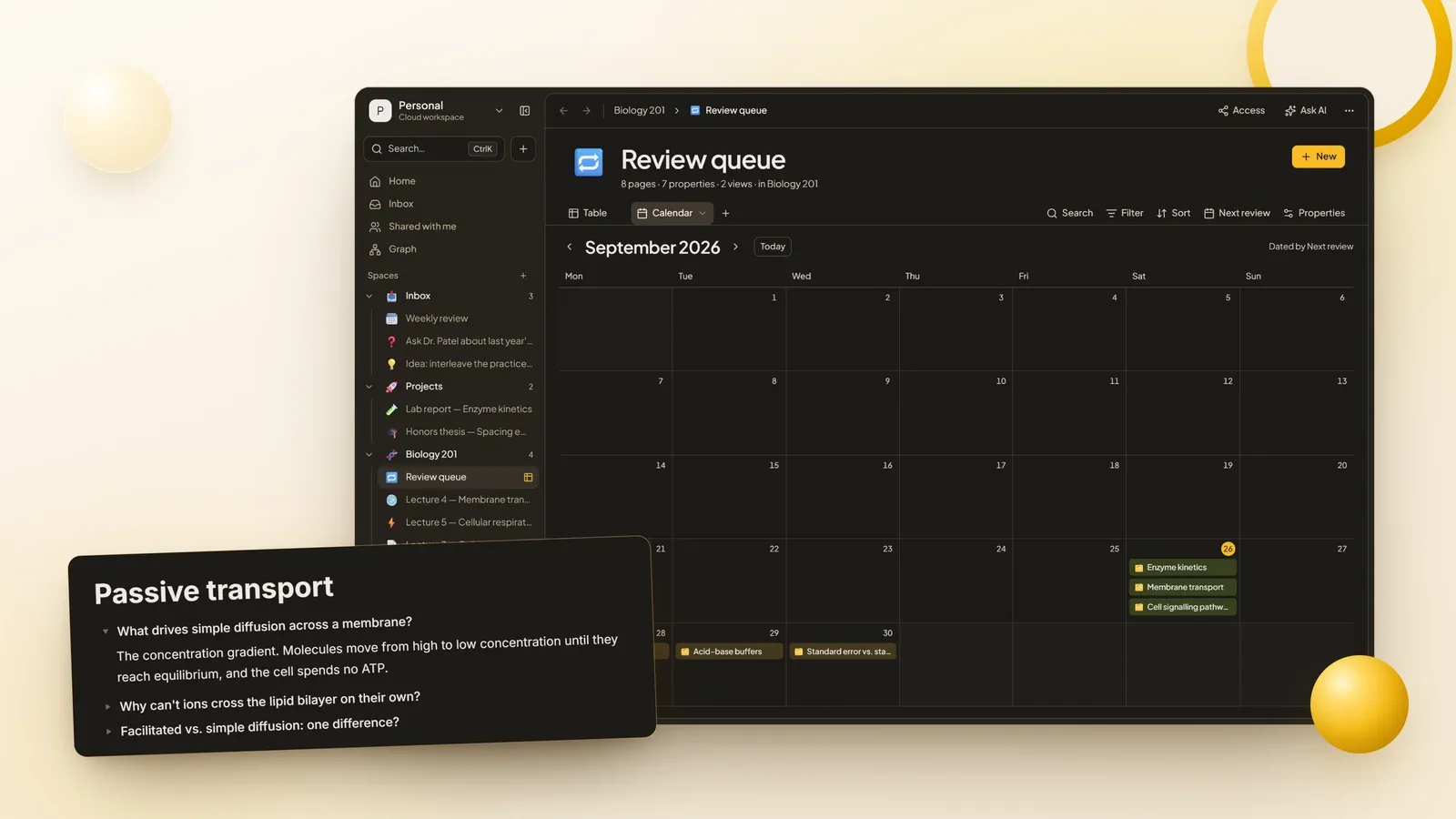
How active recall and spaced repetition work, what the research found, a review schedule matched to your exam date, and how to run both from your notes.
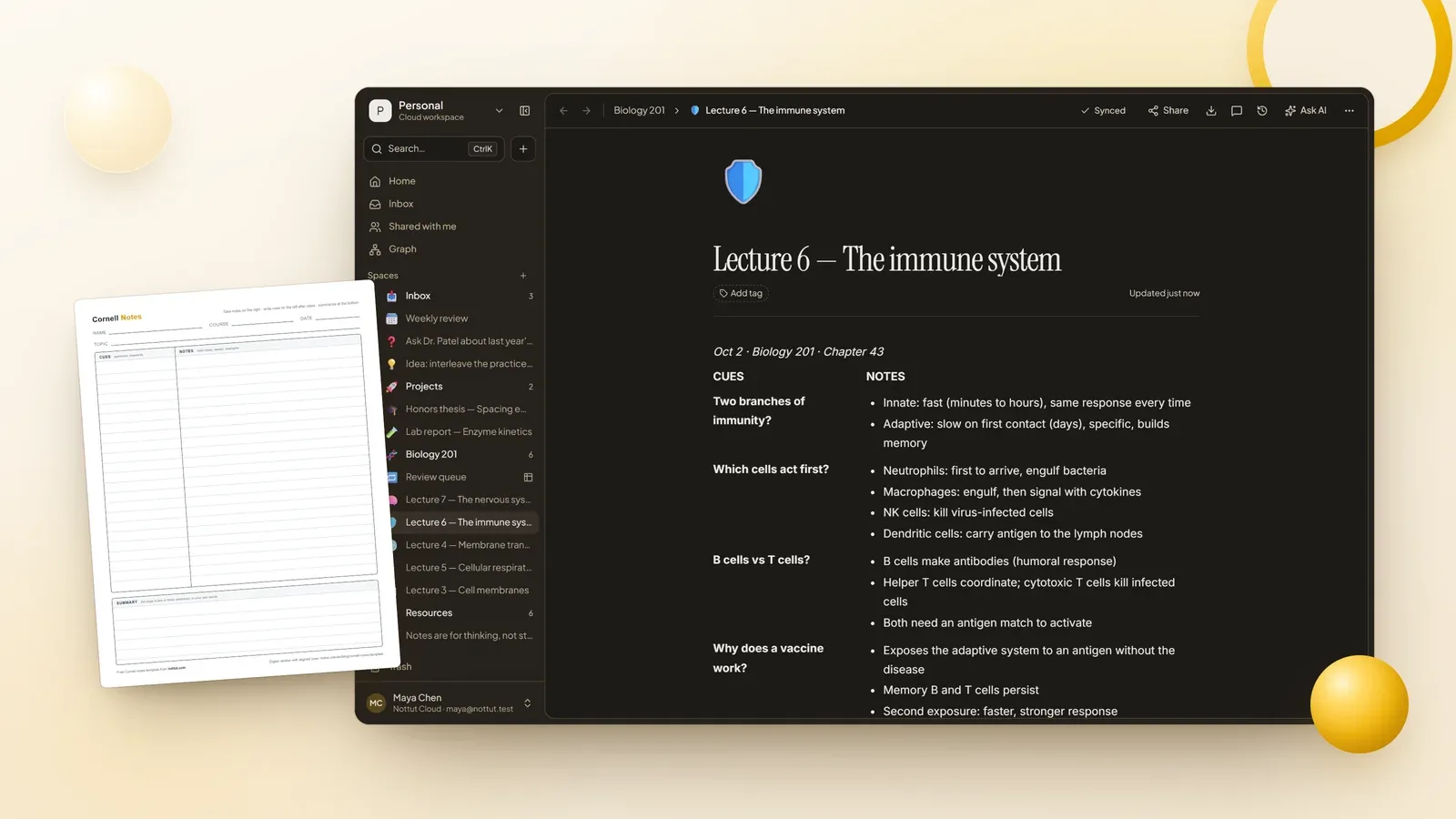
Free printable Cornell notes template in US Letter and A4, a filled-in example, and a digital version where each cue stays next to its notes.
How to take better notes, backed by research: why reviewing matters most, what to capture, laptop vs paper, and a before, during and after class routine.
Three annotated literature review examples built on real, cited studies: a thematic section, a synthesis of conflicting findings and a conclusion, plus an APA 7 template.
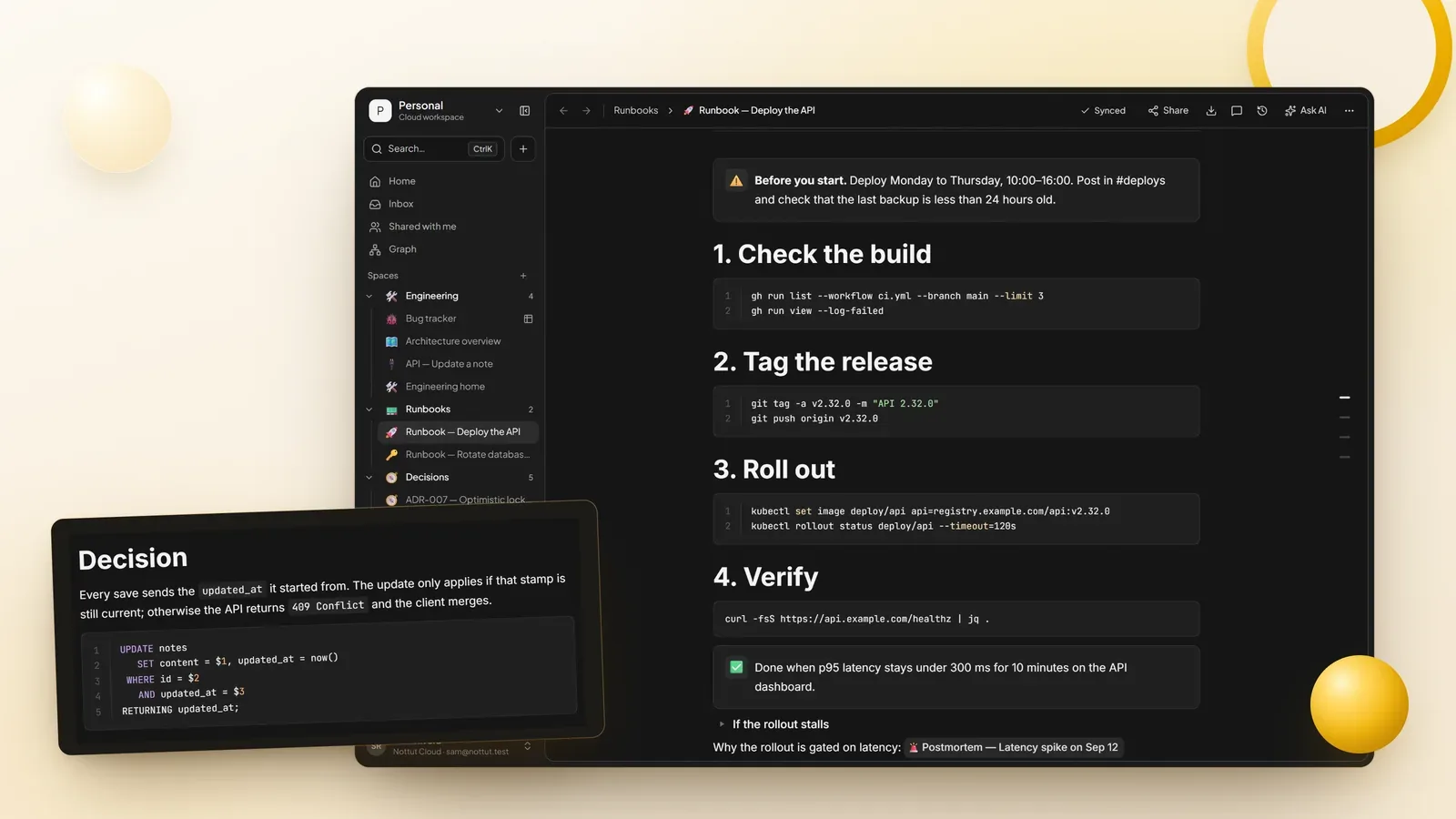
How developers use Nottut: runbooks with code blocks, linked ADRs, API notes, Excalidraw diagrams, snippet and bug databases, and an MCP endpoint for AI tools.
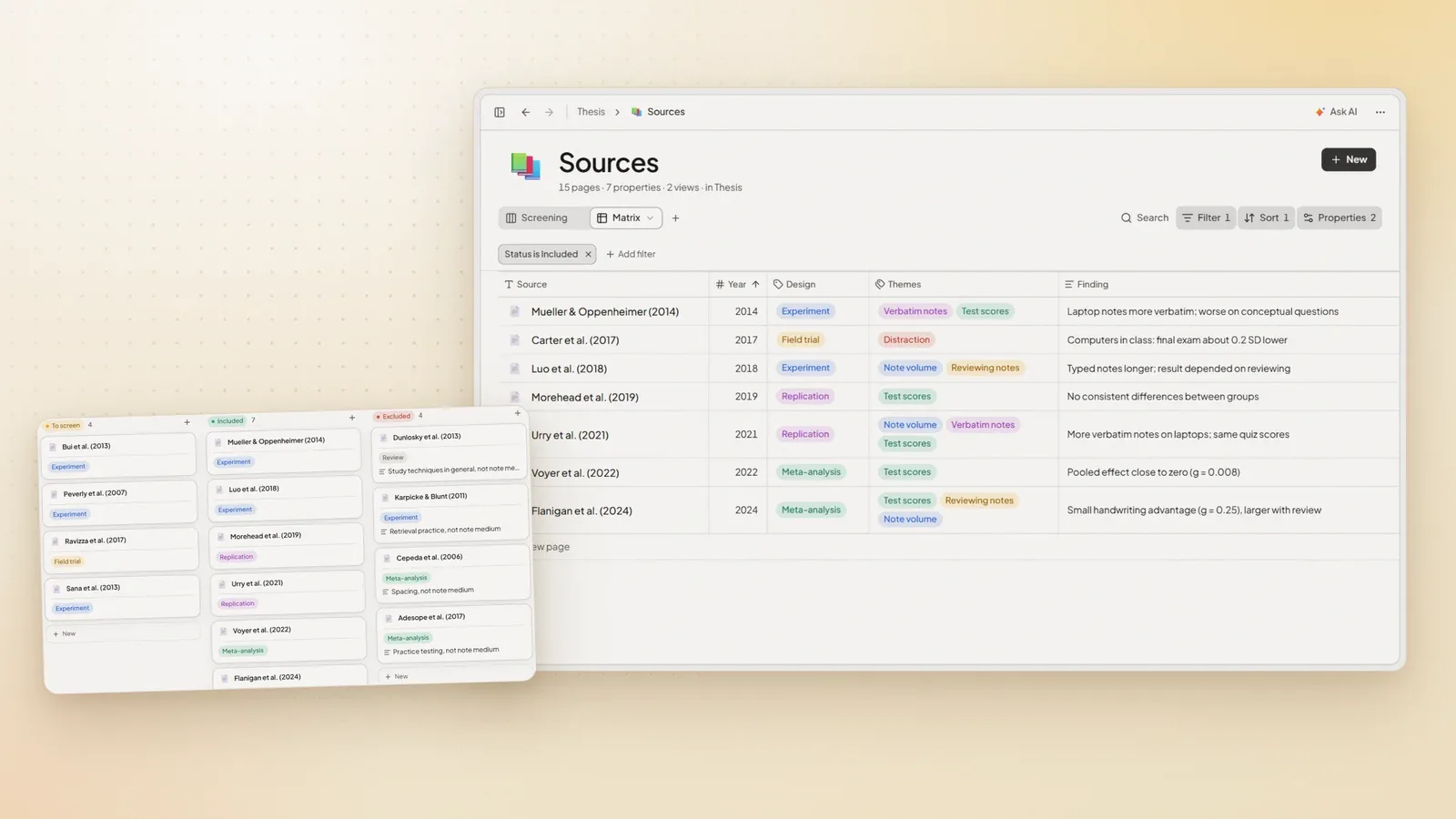
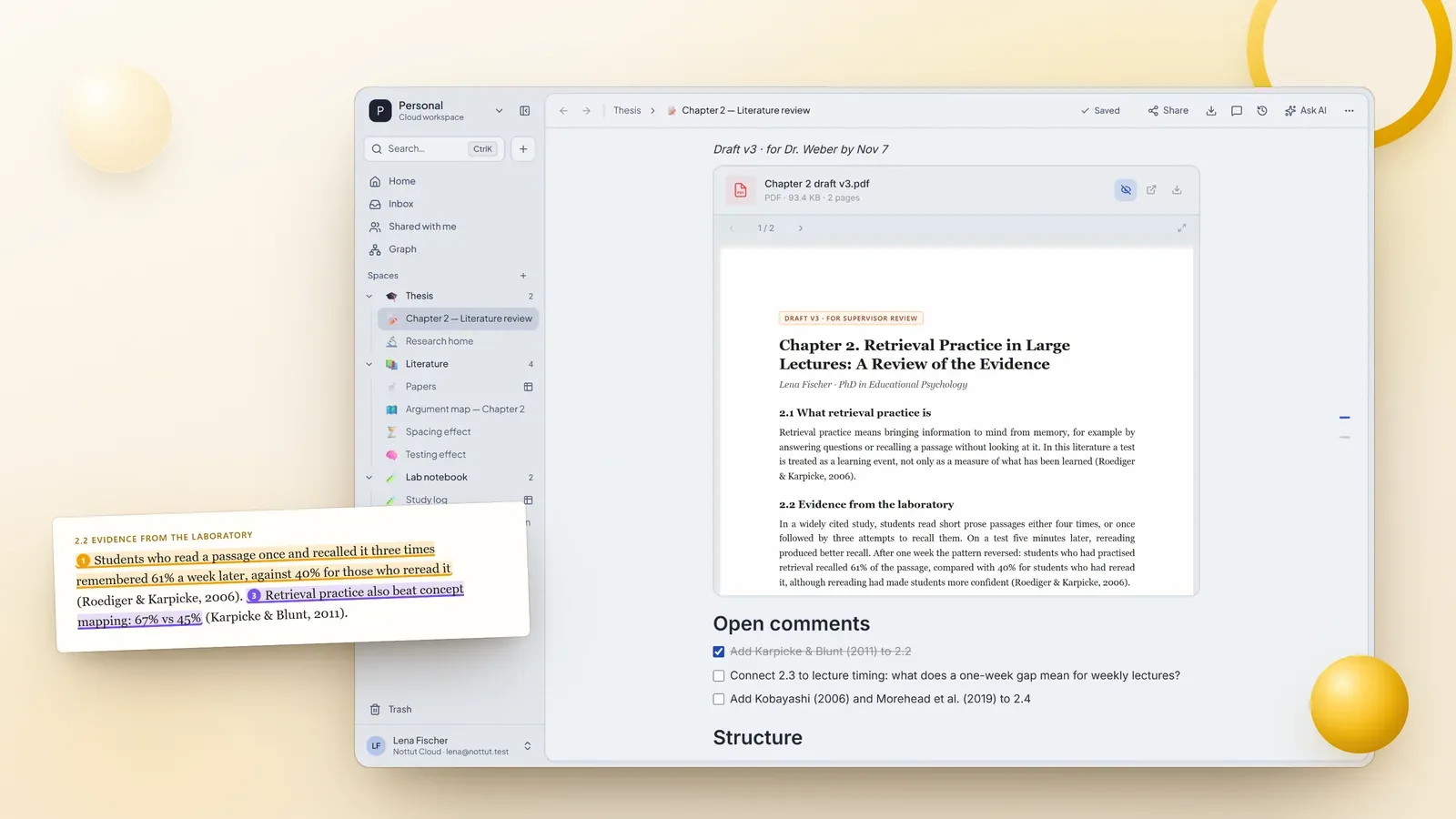
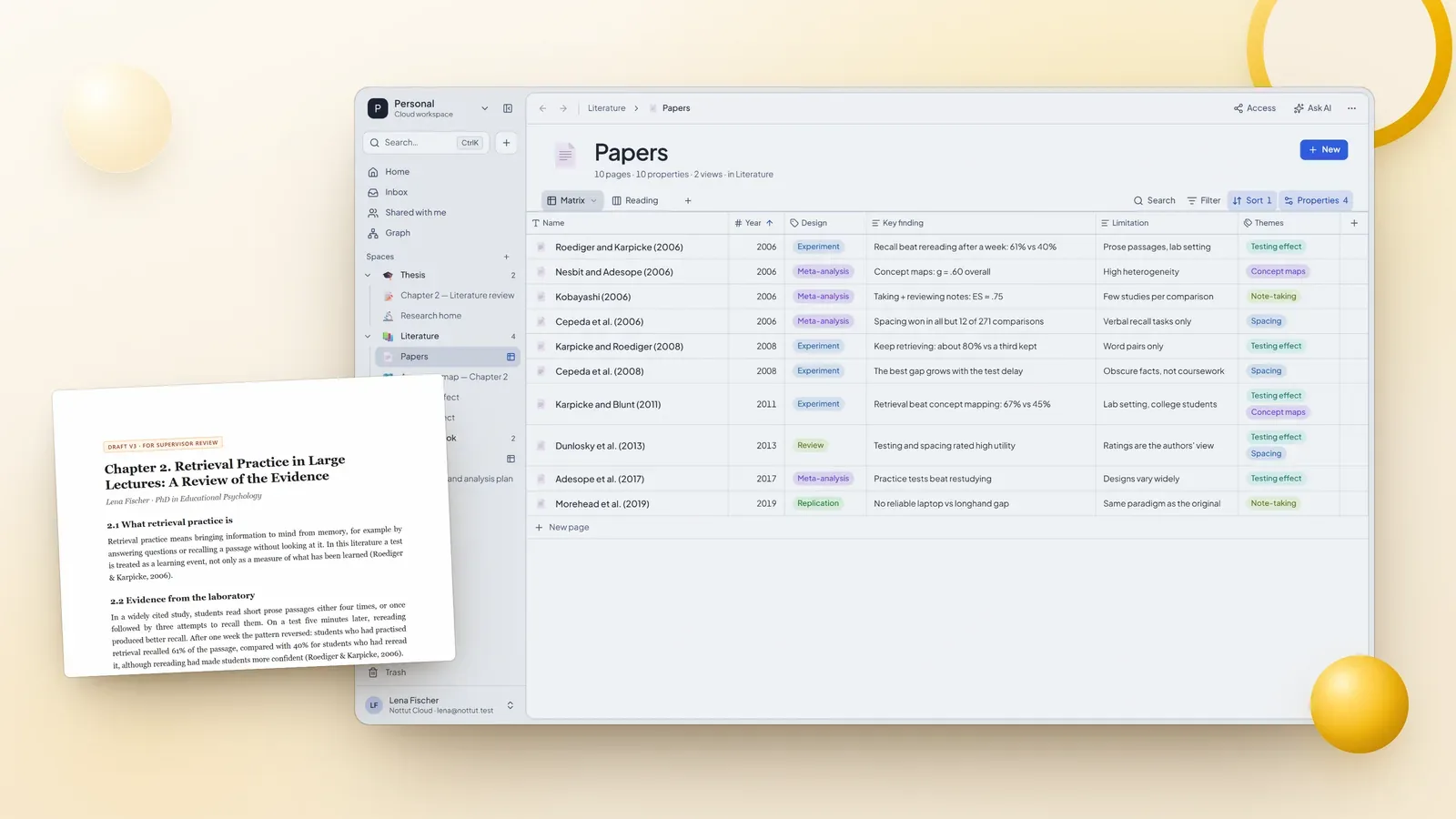
How researchers and PhD students use Nottut: a paper database you can read as a literature review matrix, one page per paper, an argument map, a research log and chapter drafts.
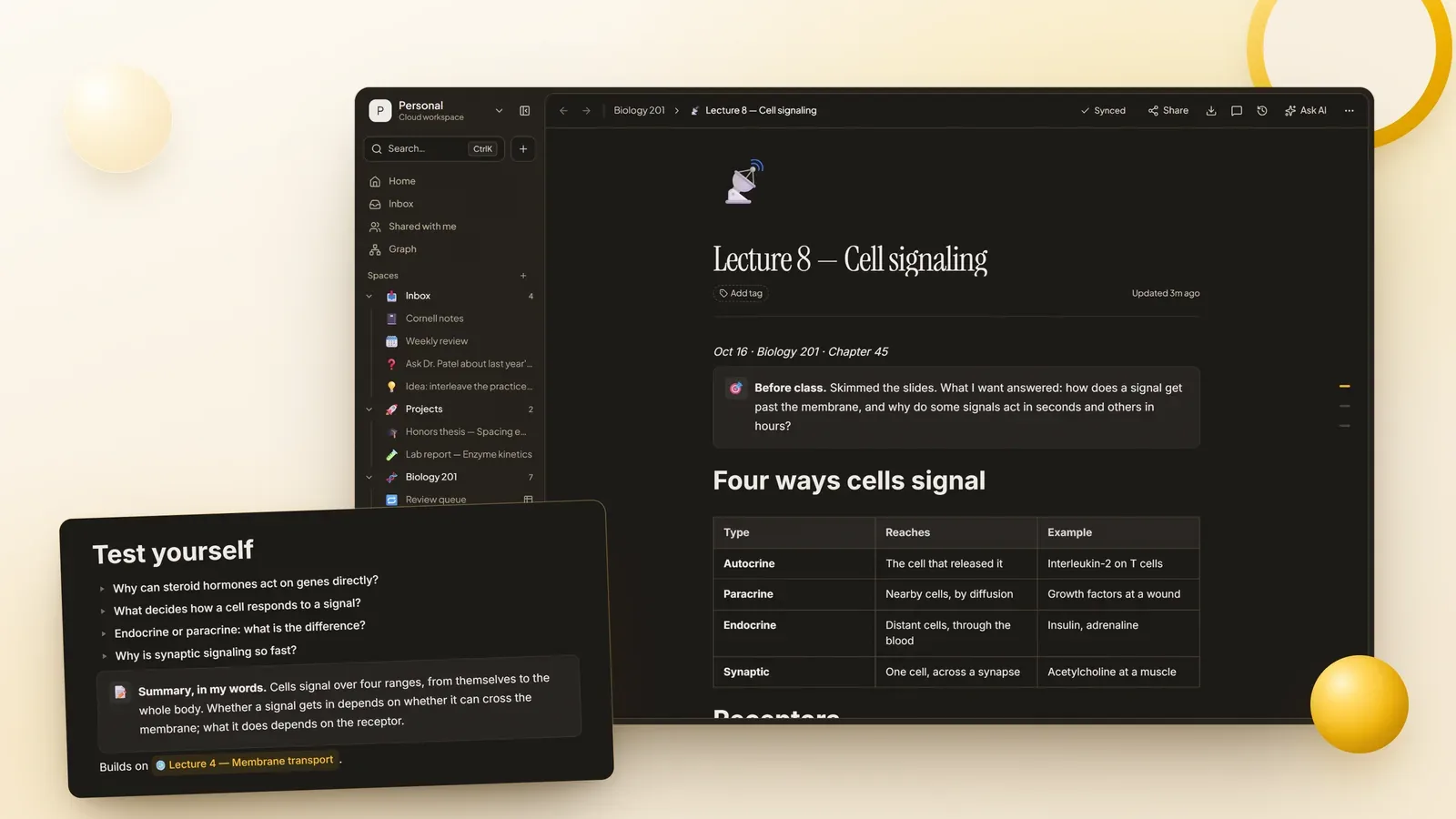
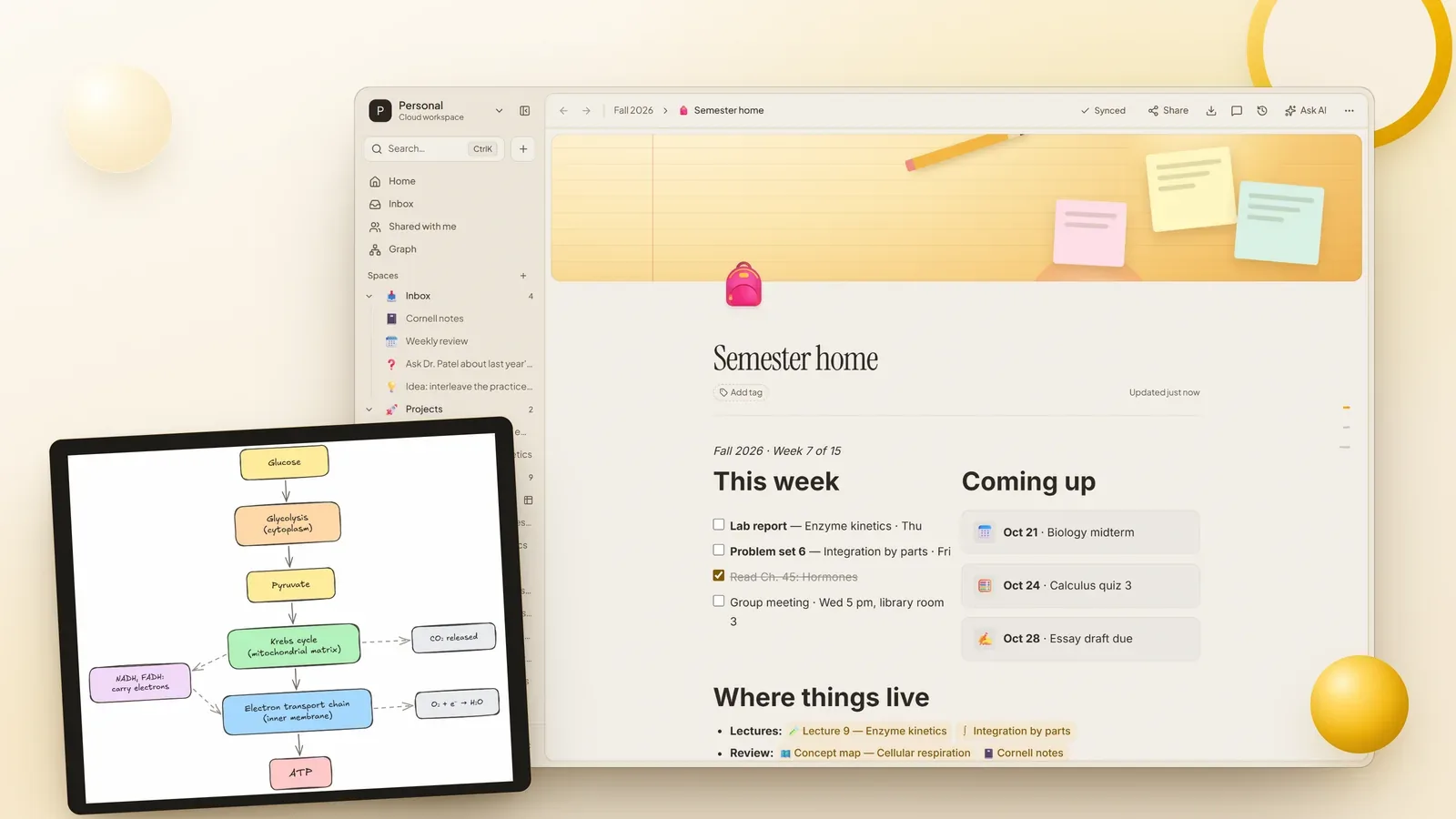
What a student note-taking app should do, plus six setups to copy in Nottut: semester home, lecture notes with formulas, concept maps and an assignment board.
Learn how to take meeting notes that turn into action. A research-backed method, a 5-part template, and digital tips for clear, useful notes in 2026.
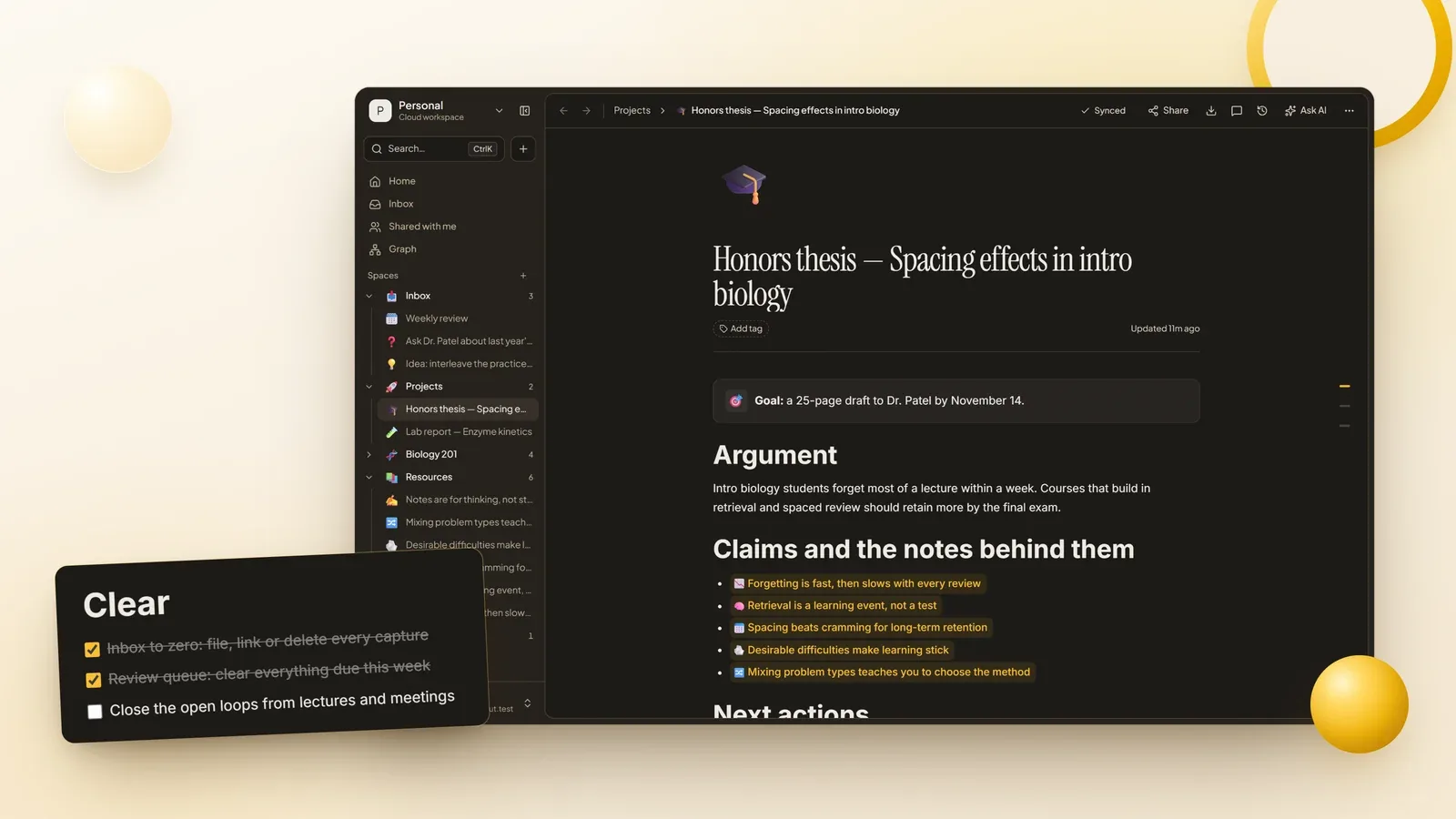
Build a personal knowledge management system that turns scattered ideas into actionable knowledge. Frameworks, methods, and tips.
Learn what a second brain system is, how the PARA method and CODE framework work, and follow a practical 7-day plan to build your own second brain in 2026.
Learn the Zettelkasten method step by step. Build a connected note-taking system that turns scattered ideas into compounding knowledge.
Learn how the PARA method organizes your notes into Projects, Areas, Resources, and Archives. A step-by-step guide to taming digital chaos.
Master the Cornell note taking method with research-backed steps, digital tools, templates, and tips to boost retention and study smarter in 2026.
How students can use a block-based AI note-taking app: media and drawing blocks, linked notes, AI summaries and public pages, and where AI helps learning.